
Experts recommend changing the lock every 10 years
An outdated lock exponentially increases the likelihood of a burglary at home or at work. Experts recommend changing the lock at least every 10 years to ensure it works properly.
Investing in home security is essential for the well-being and peace of mind of those who live there. That is why the cylinder—the technical term for a door lock—must be of high quality.
They must be equipped with advanced protection systems such as spring-loaded bolts and anti-extraction systems. A suitable cylinder must comply with the most stringent European standards governing building hardware, in which cylinders are crucial components in terms of the protection and safety of people.


Ion Ancisar, Head of Cylinder Business Development at Tesa Assa Abloy, tells us that: “In recent years, new methods of illegally opening and attacking cylinders have emerged. These methods are becoming increasingly sophisticated and require cylinders that already incorporate protection against such attacks. According to the statistics, the most common attacks are bumping and cylinder breaking. As cylinder manufacturers and with the aim of ensuring user safety, our recommendation would be for users to find out what protection their cylinder offers against these types of attacks. From there, the most sensible course of action would be to replace the cylinder if the current one does not have the minimum protection against these two types of attack.”
A suitable security system must feature a patented, non-duplicable key that ensures no blank keys can be obtained on the market, and provides protection against unauthorised duplication. Additional anti-picking, anti-drilling and anti-break-in features are essential for high-security cylinders to act as an impenetrable barrier against unauthorised entry methods.
Avoid becoming a victim of theft with these five tips:
| 1. Check the condition of your front door lock. Your key keeps you safe, but who keeps your key safe? If you’ve never had a home security check carried out, now is a good time to call in a professional to visit your home and check and service your front door lock. |
| 2. Keep track of how many spare keys are in circulation. We have lots of house keys lying around in drawers and cupboards, and we’ve given just as many to family members. It’s always a good idea to have a clear-out every now and then, check how many keys we’re currently using, and if we’re missing any, try to track them down. |
| 3. Ask who has had access to your rented property. If you’re renting, ask your landlord when the lock was last changed. It’s a good idea to do this so you know how long ago the lock was changed and, therefore, how many people might have copies of the keys. Now is a good time to change the lock to prevent too many people from gaining access to your home. |
| 4. If security is important to you, change the lock. Even if you haven’t experienced a break-in or lost your keys, it’s important to change your lock every so often, as it may have become outdated or may not be working properly over the years. It’s undoubtedly the best way to update your home’s security measures. Consult the professionals and ask for a quote based on your home’s needs, location and accessibility. |
| 5. Invest in security. Home security starts with the lock. As people become increasingly aware of the importance of home security, and in line with the previous tip, it is important that, within your means, you consider investing in a suitable security system to protect your home. |

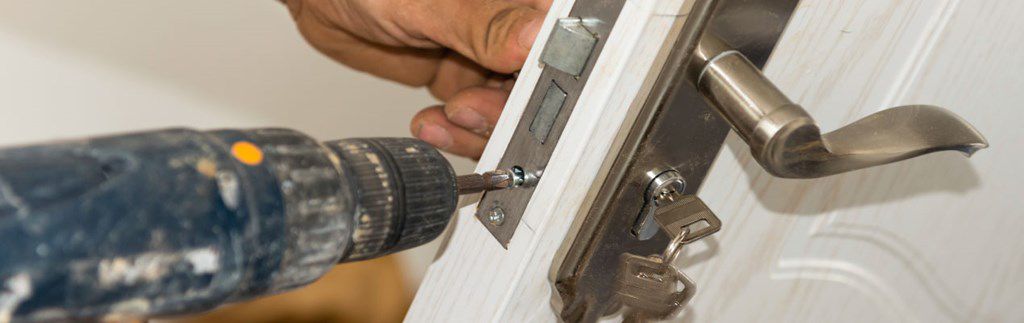
When and why should you change the lock, according to the experts?
As we mentioned earlier, it is important to change your lock at least every 10 years to ensure it does not become outdated and can continue to protect your home. But this isn’t the only time you should do so, as there are other situations where it is important to change your lock. What are they?

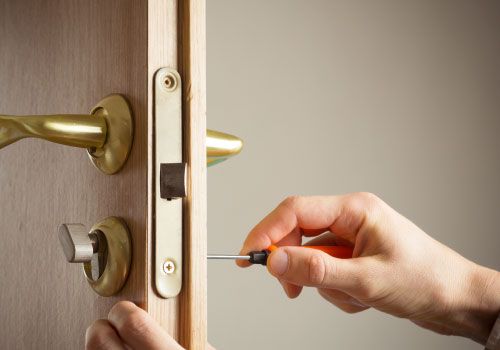
1. Lost keys
Losing your keys is a situation that causes a great deal of chaos, but it also creates a sense of insecurity, as we are placing our privacy and security entirely at the mercy of whoever finds them. It is very important to act quickly by changing the locks on all doors for which keys have been lost, and even more so if these keys bear any identification or were lost alongside other identification documents (a handbag, a wallet), as it will be very easy for burglars to gain entry to the property.
2. Change of address
Homes have a long history, and a single property may be home to numerous residents, families, workers, estate agents... Consequently, countless copies of keys are made over time. Experts therefore recommend that, for peace of mind, whenever we move house (whether renting, buying or moving into a newly built property), we should change the lock so that the house keys—which provide access to everyone—are held only by those living there, thereby controlling how many sets of keys are in circulation.
3. Home renovations
This is another critical time when it comes to home security. When we’re about to carry out renovations on our home, a wide variety of tradespeople will need to gain access to our property. Glaziers, builders, plasterers, painters, etc. … and we cannot always be at home to monitor who comes and goes, so we have to hand over our house keys and, from then on, rely on the integrity and responsibility of whoever is looking after them. It is for this very reason that we do not know whether these third parties might in turn hand them over to others, and that is when we lose control over who holds a copy of our keys at any given time. For this reason, we must change the lock once the renovation work on our home is complete.