Why is CLIQ changing the way we manage keys and access?


Last updated: 21 April 2026
For years, access management has operated on a very simple principle: a key opens a door, and whoever has it can enter. The problem arises when this principle is pitted against the day-to-day reality of many facilities. Keys get lost, staff change, there are access points that should only be active at certain times, and needs arise that a purely mechanical system cannot always address quickly.
This is where CLIQ offers a fresh perspective on security. At TESA ASSA ABLOY, we’ve developed this technology to combine the reliability of mechanical locks with the benefits of digital control, without forcing users to give up something as familiar as a key. As a result, access management is no longer dependent solely on a physical component and becomes much more closely aligned with the actual needs of each facility.
The advantage of continuing to use a key, but with much greater control
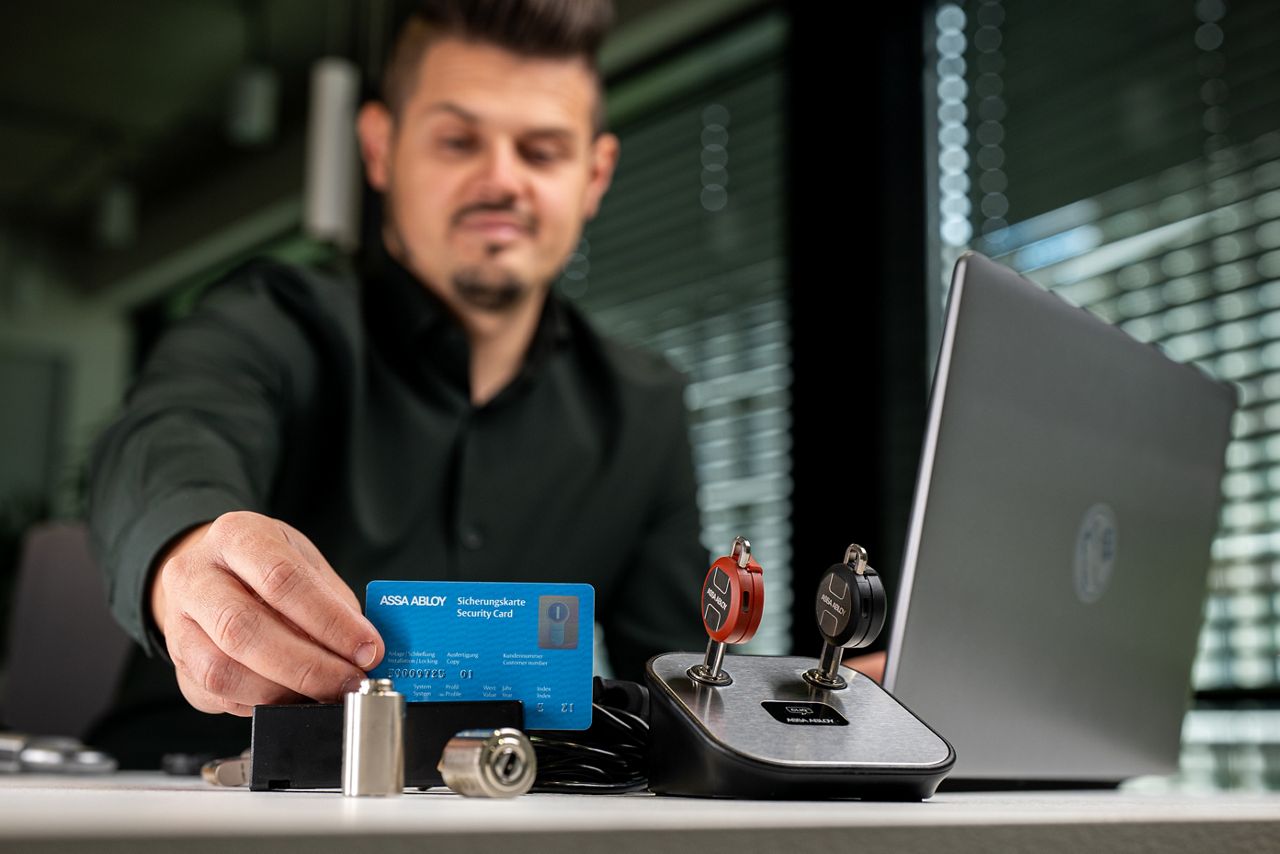
One of the reasons why CLIQ is so appealing is precisely this: it retains a familiar user experience, but adds a much more advanced layer of control. The key is still there, but it is no longer just a simple mechanical object; instead, it becomes a tool capable of adapting to different permissions, schedules and users.
This completely changes the way security is managed. It is no longer enough to know who has a key; what matters is knowing what they can do with it at any given moment. And that is where CLIQ makes the difference, because it allows you to retain the same simplicity as always whilst gaining a level of flexibility that is much better suited to the day-to-day running of offices, businesses, communities or buildings with multiple access points.
The real value lies in day-to-day management
When we talk about CLIQ, the value lies not just in the cylinder or the technology itself. It lies, above all, in what it enables you to do afterwards. Because the real challenge for many organisations is not installing a new solution, but managing day-to-day operations more effectively: adding and removing users, changing permissions, and dealing with issues relating to keys or access points that need to be resolved quickly.
This is where CLIQ really comes into its own. The technology allows you to customise access permissions, deactivate keys, reorganise access points and have greater control over who can enter, when and to which areas. That is why it is no longer just a locking system, but a management tool that supports day-to-day operations and helps you make decisions more quickly and with greater control.
A solution built to last
Flexibility alone is not enough. For an access solution to truly work, it must also offer long-term reliability. In security, convenience is only valuable when it is accompanied by stable performance and technology that is capable of coping with the facility’s actual usage.
That is why CLIQ is also built on a philosophy of durability. It is not just about managing access more intelligently, but about doing so with a solution designed to remain reliable over time and to support the operation of doors, access points and users for years to come. It is this continuity that transforms a useful technology into a truly robust tool for day-to-day management.

A smarter way to manage access
At TESA ASSA ABLOY, we see CLIQ as a solution to very specific problems that are a reality in many facilities: wasting time managing keys, incurring unnecessary costs when changes are made, restricting access with little flexibility, or foregoing greater control for fear of complicating the installation.
That’s why, when we talk about CLIQ, we’re not just talking about electronic locks. We’re talking about a more practical way to manage access, maintain control and tailor security to the actual needs of each space. And when you’re looking for particularly straightforward management, CLIQ Go makes taking that step feel much more natural.
Because security today is no longer just about locking a door. It’s about being able to manage access with greater control, more flexibility and fewer complications.