
How can access control help improve a building’s energy efficiency?

Last updated: 21 April 2026
When we think of access control, the first thing that usually springs to mind is security: deciding who enters, where and when. And that makes sense. For years, this has been its most visible function.
But today, its role goes far beyond that.
In a climate where businesses, institutions and building managers are seeking more efficient and sustainable spaces, access technology has also become a useful tool for optimising resources, reducing unnecessary consumption and improving the day-to-day management of the property.
At TESA ASSA ABLOY, we have long been working towards this vision: to develop solutions that help to secure spaces, but also to manage them in a smarter, more efficient way that is better aligned with today’s sustainability challenges.
Beyond security: a new way of managing buildings
Many buildings still rely on manual processes, physical keys and systems that are poorly integrated. This complicates day-to-day operations, where any change to access permissions, incident or adjustment to the use of a space requires more time, more travel and more resources.
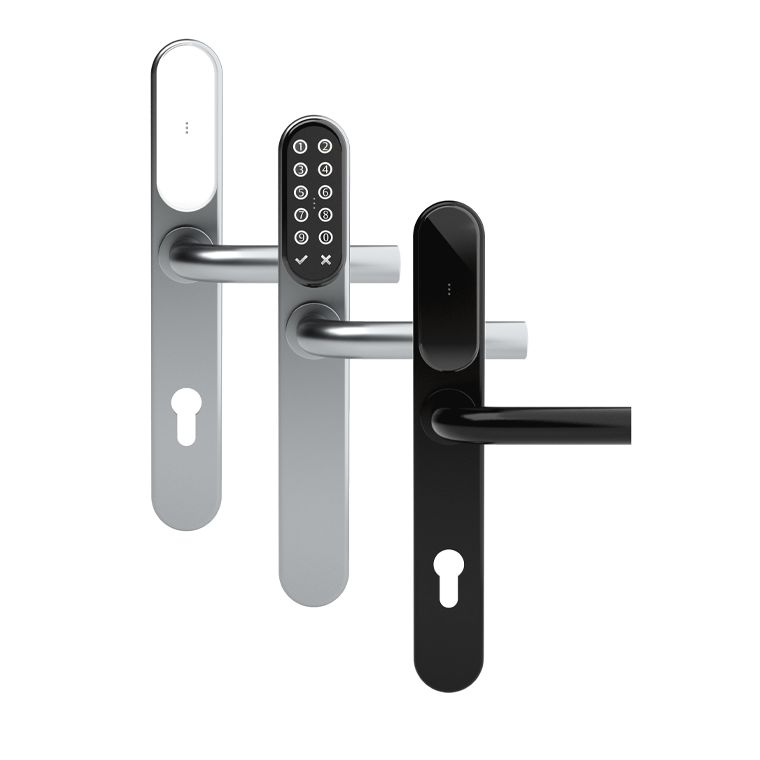
Digitalisation completely transforms this situation. With solutions such as SMARTair, access and permission management becomes much more streamlined. It is possible to tailor access rights to the building’s actual needs, respond quickly to changes and reduce many on-site tasks that previously took up time and effort.
This is particularly important in environments where footfall is constant and variable, such as offices, care homes, schools, hospitals or multi-user buildings. In all these settings, smarter access management not only improves security but also the overall efficiency of the building.

Digitalisation and energy efficiency: an increasingly close relationship
When we talk about energy efficiency in a building, we tend to think of heating and cooling, insulation or lighting. But the way access is managed also plays a part.
Why? Because a building that is better suited to its intended uses can function in a way that is more in tune with reality.
Electronic access control systems enable building operations to be adapted to timetables, occupancy levels and specific requirements. This facilitates more efficient management of resources such as lighting, heating and cooling, or certain maintenance tasks, thereby avoiding unnecessary energy consumption in areas or at times when activity is low.
In other words: when a building operates in a more connected way, it can also operate more efficiently.

Fewer manual processes, lower resource consumption
Sustainability does not depend solely on direct energy consumption. It also has to do with the materials we use, the journeys we make and the processes we maintain.
That is why replacing physical keys with electronic or mobile credentials represents a significant improvement. It not only offers convenience and flexibility, but also helps to reduce the use of materials, avoids unnecessary physical duplicates and simplifies the process of updating access rights without the need for on-site intervention every time a change is made.
There is another significant advantage: the ability to implement access control solutions without the need for complex building work. Opting for systems that allow for quick installation with minimal disruption to the existing infrastructure reduces inconvenience, shortens commissioning times and avoids the additional costs associated with more invasive refurbishments.
Durability and responsible innovation
Although digitalisation is a key driver for improving efficiency in buildings, it is not the only one. The design of the product itself, the durability of the materials and the optimisation of its performance also play an important role in reducing environmental impact.
Efficiency is also built over the long term. Designing durable solutions that are energy-efficient and require less frequent replacement is another way of contributing to more sustainable buildings. The longer a system’s lifespan and the better its performance, the greater its ability to reduce its environmental impact over time.
At TESA ASSA ABLOY, we take a broad view of innovation: we develop solutions that deliver value not only through connectivity and digital management, but also through their design, reliability and performance in use.
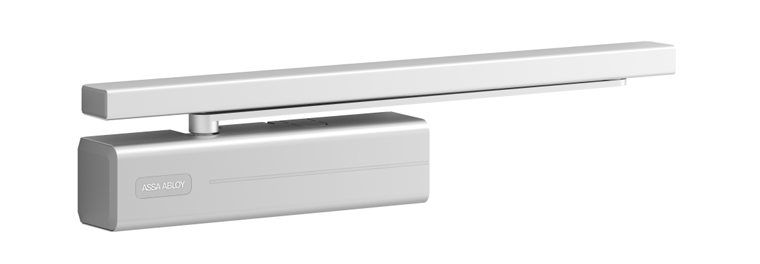
One example of this is the Cam Motion® technology in our door closers, designed to reduce opening resistance and help improve the building’s energy efficiency.
A commitment to measurable results
For us, sustainability isn’t just an intention: it must be demonstrable.
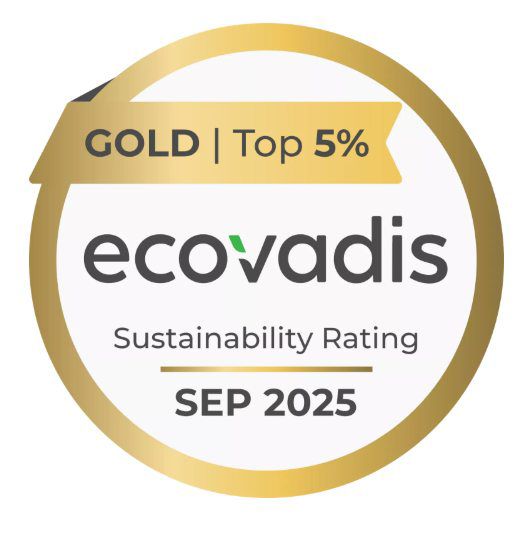
That is why we are working to measure and improve the environmental impact of our solutions. In 2026, we were awarded the EcoVadis Gold Medal, a recognition that places us among the top 5% of the most sustainable companies in our sector and reinforces our commitment to the environment, ethics and good social practices.
Furthermore, since 2008 we have developed more than 250 Environmental Product Declarations (EPDs), which enable us to quantify the environmental impact of our solutions throughout their entire life cycle. As a result, we help our clients to progress towards sustainable building certifications such as BREEAM and LEED, which are becoming increasingly important in responsible construction projects.

Smart security for more sustainable buildings
A building’s energy efficiency does not depend on a single decision, but on the sum of many improvements which, taken together, make a real difference. Access control is one of them.
When integrated into a broader management strategy, it can help not only to enhance security, but also to optimise the use of space, reduce unnecessary tasks and move towards more responsible and efficient operations. And this progress can stem both from digitalisation and from the design of sustainable solutions that are better equipped to meet the building’s actual needs.
At TESA ASSA ABLOY, we view innovation precisely from this perspective: developing technologies and products that protect people, facilitate property management and help to create more sustainable environments.
Because the future of buildings isn’t just about making them safer. It’s also about making them smarter, more efficient and better equipped to use every resource responsibly.